• Skip to primary navigation
  • Skip to main content
  • Skip to primary sidebar

Appliance. net

Appliance news, reviews, ratings, forums, reports and buyers guides.
Locate repairs and parts. for home and kitchen appliances.

  • About Appliance.Net
    • BestPrice Family
    • Contact
    • Become a Featured Dealer
    • Retailer & Repair Services Advertising
  • Shopping
  • Appliance Forum
  • Manufacturers
    • Manufacturers 800 Numbers
    • Aga
    • Bosch
    • Caldera
    • Dacor – The Life of the Kitchen
    • General Electric – GE
    • Jenn Air
    • Sears – Kenmore
    • Thermadore
  • Sections
    • Features
    • News
    • Recalls
    • Kitchen
      • Dishwasher
      • Ranges Ovens and Cooktops
      • Refrigerators and Freezers
      • Microwave Oven
    • Household
      • Consumer Electronics
      • Heating and Cooling
      • Vacuum Cleaners
    • Laundry
      • Washing Machine
      • Dryers
    • Safety
You are here: Home / Archives for Washing Machine

Washing Machine

Appliance Maintenance Tips and Lifespan Estimates

March 27, 2008 By NightOwl

I think it’s good to be reminded regularly to look after these appliances we spent so much to acquire.  So I feel justified in offering this list from the Sun Herald that nudges you to take a minute and check up on your household appliances. It could add years to their lifespan.

Refrigerator

Average life span: 14 years

What you need to do: Locate the condenser coils by checking your owner’s manual. Clean them by unplugging the fridge and removing dust gently with a broom or brush. Check the seals by sliding a piece of paper in the closed door. If it falls out, you need to replace your seals. And defrosting regularly can’t hurt.

Inspected and cleaned: Have it done if your at-home remedies don’t work or if there are noises you can’t locate.

Washer, dryer

Average life span: Washer: 12 years; Dryer: 14 years

What to do: Clean the dryer’s lint filter and hoses. Kinks or ridges can cause highly flammable lint to build up, a major cause of fire.

Inspected and cleaned: Replace the hoses on your washing machine every 3 to 5 years.

Window air conditioner

Average life span: 13 years

What you need to do: Changing the air filter every month helps the system run more efficiently and improves air quality. Dirt and neglect are the main causes of AC failures, so clean it well.

Inspected and cleaned: Do it twice a year, usually fall and spring.

Garbage disposal

Average life span: 13 years

What you need to do: Keep anything stringy, like pumpkin pulp, out of it. Also leave out tough produce, anything hard that can dull the blades, and grease, which can clog your pipes.

Inspected and cleaned: Have this looked at whenever your plumbing is checked.

Microwave

Average life span: 5 to 8 years

What you need to do: Microwaves are simple appliances; they don’t know the difference between the food you want cooked and old splatters in the chamber, so keep it clean and don’t exceed the recommended usage.

Inspected and cleaned: Anytime there’s a problem. You should never attempt to work on it yourself.

Dishwasher

Average life span: 9 to 12 years

What you need to do: Be mindful of what you put in it. Leave out small pieces that can get lodged in the drain and make sure everything is dishwasher-safe. Use a powdered detergent, because gels can cloud dispenser and glasswear. Spend the few dollars on a rinse aid, such as Jet-Dry, every month or so.

Inspected and cleaned: Every 2 to 3 years.

Water heater

Average life span: electric: 6 to 14 years; gas: 5 to 9 years

What you need to do: Check your hoses, fittings and release valves. Also watch for damaged areas on the outside of the tank and leaking.

Inspected and cleaned: Every couple of years.

Stove

Average life span: electric, 16 years; gas, 19 years

What you need to do: Check temperature with a thermometer or by following a basic white cake mix and making sure it cooks correctly. Keep it clean inside and out, using nonabrasive cleaners. Check your seals and the hinges, which can bend over time and let heat escape.

Inspected and cleaned: Any time it’s not heating properly.

Central air system

Average life span: 10 to 20 years

What you need to do: Check for leaks around the system and with hose connections. You should also change your filter monthly.

Inspect and cleaned: Seasonally
Filed Under: Dishwasher, Dryers, Features, Gas Range, Heating and Cooling, Household, Kitchen, Laundry, Parts/Repairs, Refrigerators and Freezers, Washing Machine, _ Tips Tagged With: appliance lifespan, appliance maintenance, dryer maintenance, refrigerator maintenance, washer maintenance

Is a Steam Appliance Right for You?

March 26, 2008 By NightOwl

Steam is hot right now.  It is showing up in a variety of appliance and is touted as the way to sanitize, freshen and even shorten cleaning times. Consumer Reports weighed in on steam use in appliances at abclocal.go.com sharing their opinion of steam’s usefulness.

One thing to be aware of before even considering a steam unit is the cost:

Kimberly Janeway from Consumer Reports, says “Some cost twice as much or even more than the best buys we recommend, which don’t have a steam feature.”
The steam feature not only adds to an appliance’s price, it also adds time to wash cycles. For example, for the clothes washers, it added as much as 25 minutes. For the dishwashers, it added up to 45 minutes.
Consumer Reports’ Emilio Gonzalez just tested two washing machines with steam modes from Kenmore and Whirlpool. Both companies claim their steam features boost cleaning performance and remove stains better.
“While the washers did better at removing stains when using the steam setting, they still cleaned very well even without the steam,” says Gonzalez.
Consumer Reports also tested the steam settings of Kenmore and Whirlpool dryers. Testers used wrinkled shirts exposed to cigarette smoke.
“The dryers got rid of most of the odors and wrinkles from the shirts, although there were wrinkles still left on the sleeves. So it’s a refresher, but not a replacement, for going to the dry cleaner,” says Janeway.
New dishwashers made by Jenn-Air, LG, Maytag, and Kenmore also have a steam-cleaning feature. Consumer Reports put them through one of its toughest food cleaning challenges: removing baked on brownie batter.
Janeway says “Steam only improved cleaning slightly on all four dishwashers.”
So while steam may be the hot new trend in appliances, Consumer Reports says it’s an extra feature that’s not worth the extra money.

So, depending on your opinion of Consumer Reports, you have the beginnings of an answer to the question- Is a steam appliance right for you?

Filed Under: Dishwasher, Dryers, Features, Kitchen, Laundry, Washing Machine Tagged With: consumer reports, steam appliance, steam dishwasher, steam dryer, steam washer

Appliance Sales are Down

March 24, 2008 By NightOwl

Here’s some bad news for appliance dealers (if they haven’t already noticed the effect in their own markets)

 Twice.com reports that according to AHAM (Association of Home Appliance Manufacturers), January shipments of major appliances fell 17 percent to 3.9 million units compared with the 4.7 million major appliances sold during the year-ago period.

Taking the biggest hit was the home-comfort sector, which was dragged down by a nearly 60 percent drop in room air shipments. The decline was only minimally offset by a 2.8 percent increase in dehumidifier sales, AC’s sister category.

The cooking category also felt the heat, down 15.6 percent year-over-year to nearly 1.2 million units. Leading the decline was microwave ovens, off nearly 19 percent in January. Among ranges, ovens and cooktops, gas-fueled models fell 10.7 percent while electric models saw an 11 percent decline last month. Gas cooktops were singed by a 17.2 percent decline, marginally offset by a 1.2 percent increase in gas oven shipments. By contrast, electric cooktops enjoyed a 5.1 percent gain, while shipments of electric ovens dropped 10.6 percent.

Among the other core appliance categories, kitchen cleanup dropped nearly 14 percent to some 808,300 units, food preservation fell nearly 9 percent to approximately 623,700 units and home laundry slipped 3.1 percent to about 964,000 units.

There were, however, several bright spots. Besides the gain in electric cooktops, portable dishwashers saw shipments climb 21.3 percent and wholesale sales of gas clothes dryers were up nearly 6 percent. But among their category counterparts, electric dryers declined 3.1 percent and washing machine shipments were off by 4.5 percent, to about 519,300 units. Similarly, shipments of build-in dishwashers declined 7.8 percent, disposers fell 19.4 percent and compactors dropped 19.5 percent.

Within food preservation, refrigerator shipments declined 8.8 percent to some 513,700 units while freestanding freezers fell 9.5 percent, led by a 12.7 percent decline in chest-style models.

Summarizing the month is the AHAM 6, an amalgam of the industry’s core washer, dryer, dishwasher, refrigerator, freezer, range and oven categories. Factory shipments for that grouping fell 7 percent in January, to 2.4 million units.

Filed Under: Dishwasher, Dryers, Features, Gas Range, Household, Kitchen, Laundry, News, Ranges Ovens and Cooktops, Refrigerators and Freezers, Washing Machine Tagged With: AHAM, appliance sales, Association of Home Appliance Manufacturers, major appliances

Buying a Washing Machine?

March 21, 2008 By NightOwl

If you are looking for a new washing machine, you’ve probably asked yourself these questions – Top loader or front? How can I be sure to buy an energy efficient washer? We’ll try to answer those and some others with help from the Federal Trade Commission’s (FTC) site on consumer protection.

To help consumers see just how energy-efficient a washing machine is, the Federal Trade Commission requires manufacturers to post an EnergyGuide label on their appliances. The Guide shows how each model measures up — energy-wise — to others of the same size.

With front-loaders now more widely available for purchase in the U.S., the FTC has decided to require manufacturers to provide information that will compare all washing machines of a certain size (either “standard” or “compact”) with others of the same size, regardless of whether they are loaded from the top or the front. The label change is expected to alert consumers to highly energy-efficient clothes washers and spur competition among U.S. manufacturers. Front-loaders, which have been popular for years in Europe, generally are considered more energy efficient than top-loaders, although they usually are more expensive, too.

Most washing machines sold in the U.S. are top-loaders. They wash the clothes with an agitator that turns on a vertical axis. The tub also spins the clothes dry on a vertical axis. Front-loaders work by tumbling the clothes and then spin-drying them in a tub that rotates on a horizontal axis.

There are some exceptions: One manufacturer makes a horizontal-axis machine that loads from the top, and another company sells a machine with an axis that is between vertical and horizontal.

Typically, front-loaders use less water — from one-third to one-half the amount that top-loaders require. The clothes tumble in the tub, rising above the water and then falling back into it as the tub rolls on its side. Because less water is used, less gas or electricity is required to heat the water; because the machines spin faster, clothes get wrung out more completely, reducing the cost of running a clothes dryer.

Horizontal-axis washers (front-loaders) have one major drawback: They can cost more than vertical-axis machines. Still, with the energy savings they provide, front-loaders may save you money in the long run. In some areas of the U.S., utility companies, environmental groups and government agencies help sweeten the deal by offering incentives to consumers who buy front-loaders. At the same time, there are many highly efficient top-loaders available, too. Use the EnergyGuide to find efficient products at the price that’s right for you
The bright yellow-and-black EnergyGuide label helps consumers factor an appliance’s energy consumption or efficiency and its annual operating cost into their purchasing decision. The law requires manufacturers to place the label on most major appliances so that consumers will see it when they are considering various models.

The EnergyGuide for clothes washers uses kilowatt-hours (a measure of electricity use) to tell how much energy each appliance uses in a year and compares the appliance with other appliances of the same or similar size. The range on the label — where the appliance’s energy use is on a continuum — is of particular benefit to consumers: A marker shows where the particular model falls in the range and how it stacks up against the competition.

The EnergyGuide also gives the estimated cost per year to run the particular model when it is used with an electric water heater and with a natural gas water heater.

Once you’ve bought your washer and had it installed, you’ll want to use it as efficiently as possible the FTC has tips there too:

  • If possible, wash one big load rather than two small ones.
  • Load the washer to capacity.
  • If you must wash smaller loads, select lower water levels, if possible.
  • Use cold water rinses.
  • Use lower temperature settings and pre-treat or pre-soak stains or heavily soiled clothing.
  • Use the recommended amount and type of detergent.
  • Set the thermostat on your water heater to no higher than 120 degrees Fahrenheit.

Filed Under: Features, Laundry, Washing Machine, _ Tips Tagged With: Buying a Washing Machine, energy efficient washing machine, energy guide

A Jaunt for the Weekend- A Virtual Trip to the Washing Machine Museum

March 15, 2008 By NightOwl

If you’re looking for a museum trip without the drive, just click here to visit the Washing Machine Museum. If you want to make the trip a real, not virtual experience, the museum is located in Eaton, Colorado with tours by appointment.

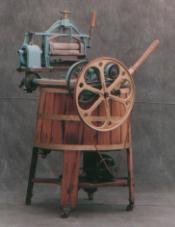
The virtual tour offers glimpses of the forgotten world of early hand, gas and electric powered washers. You can see the washers with wringers that advertise themselves with phrases like “Never Crush” and “Saves Women’s Lives”. Fingers were known to be not only crushed, but severed in wringers. There is also the Horton which claims “A Horton Washer will add many years to your life. It will save your health– keep the wrinkles out of your face–keep you youthful”.horton antique washer

The site includes an article about the invention of the washing machine, options to have your own antique appraised and of course, the virtual tour.

The tour is self guided and includes outdoor views of the rural museum, two buildings filled with vintage washers, a workshop and a barn with what appears to be washers awaiting restoration.

A fun afternoon’s visit, with some history and a great feeling for how much easier laundry is now.

Filed Under: Features, Humor, Laundry, News, Washing Machine Tagged With: antique washing machine, Washing Machine Museum

Sears Unveils Kenmore Elite Oasis Washer and Dryer

March 11, 2008 By NightOwl

Laundry Pair Combines High Efficiency with Deep Clean Functionality and SteamCare Technology
Kenmore Elite’s SteamCare technology, harnesses the power of steam by saturating dry clothing with a fine mist of water while simultaneously heating the interior of the appliance. The water and heat work together to reduce the appearance of wrinkles and odors, so consumers can avoid washing an article of clothing that may only need refreshing, saving both water and energy.

The new Oasis washer cleans better than any other model among leading brand top loaders, offering features like gentlewash technology to clean delicate items and Catalyst Cleaning Action to help ensure bright whites. The TimedOxi option, available in a top load model for the first time through Oasis, releases oxygen-based stain fighters at the precise time for powerful stain-fighting performance. Additionally, the washer is certified by the National Sanitization Foundation to eliminate 99.9 percent of certain bacteria found in clothes, sheets and towels.

Kenmore continues to deliver on high efficiency with this newest addition to the Oasis line up, as both models are more efficient than first generation Oasis HE models, surpassing ENERGY STAR standards. Adding to the efficiency, the Save Energy Plus feature conserves up to 20 percent more energy by extending wash times using cold water in cycles that may typically use hot water.

The Oasis washer’s Invizible Agitator sits low in its drum, allowing more space for clothing or bulky items like comforters and winter coats. Transparent, tinted glass doors on both the washer and dryer deliver a unique aesthetic, and consumers interested in second floor installation will be comforted to know that the Kenmore Elite Oasis creates the fewest vibrations in the industry.

The Oasis washer offers Kenmore Canyon Capacity — 4.6 cubic feet of cleaning space that efficiently cleans up to 24 bath towels in a single load. Also available in the Oasis dryer, the exclusive 7.4 cubic feet Canyon Capacity ensures that a full load from the washer will be effectively dried.

TurboDry technology in the Oasis dryer uses a 35 percent larger blower to increase airflow, drying a load of laundry more quickly than it takes to wash one. The Dual Action Drying system also contributes to faster dry times by simultaneously promoting airflow and tumbling.  Gentleheat technology uses an advanced computer to measure air
temperature and moisture more accurately and calculate exactly how long a cycle should run, resetting the temperature as needed to improve fabric care.

The Oasis and Oasis pair will be available in white in March 2008 at for the regular retail price of $1,099. SteamCare and energy efficiency are also available in the HE Steam Laundry pair in white and the designer color, barolo. Prices range from $1,499 to $1,599 for washers and $1,199 to $1,299 for dryers depending on color. Base pedestals retail
for $259.99 each in color and $229.99 each in white.

Filed Under: Features, Laundry, Washing Machine Tagged With: dryer, HT top loader, Kenmore Elite Oasis Washer and Dryer, top loader, washer

Bosch Showcases Appliances that Offer Complete ECO Solutions at Builders’ Show 2008

February 22, 2008 By NightOwl

Bosch showcases it most advanced lineup of kitchen and laundry appliances that offer complete ECO solutions at the 2008 International Builders’ Show. Bosch remains the undisputed leader with the ENERGY STAR qualification on all its models in every major appliance category that the program rates. With the most energy-efficient dishwashers in the country, and the leading energy-efficient laundry – including the new compact 24” Axxis® Washer, as well as the award-winning Nexxt® Series with the unique ECOACTION™ option – the brand continues deliver efficiency. Additionally, the brand is debuting a space-efficient 30” gas cooktop featuring increased cooking flexibility with a fifth burner, sleek metal knobs and the powerful capabilities of the exclusive POWERSIM™ and OPTISIM™ burners.

Laundry
Bosch introduces its new 24” compact stackable Axxis Laundry that offers the largest capacity in its class at 3.4 cubic feet, accommodating up to 14 pair of jeans. When combined with the Axxis Condensation Dryer, which does not require any ducting or venting, Bosch 24” laundry becomes the ultimate high-quality solution for any type of multi-family builder development or consumer application. In addition, the Axxis Laundry system features a unique structured drum with steep edges to ensure that the most heavy-duty jobs are handled efficiently. Paired with the new curved and asymmetric agitator paddles in the washer, clothes are treated gently as the water cascades down like rain. Ensuring the most precise and efficient results, the Logixx™ control system automatically determines revolutions per minute, number of rinses, soak time and spin speed for every fabric selection, while the new touch controls make the overall operation easy-to-use.

Bosch’s 27” depth front-loading Nexxt Washers also make it easier than ever to achieve maximum energy savings. Simply push the green-colored “e” button to take advantage of the advanced ECOACTION option, on select 500plus and 800 Series models, which decreases the temperature and amount of energy used during the wash cycle by up to 20% – without affecting cleaning results. Also, Nexxt Dryers conserve energy with its ECOSENSOR™ feature, which uses less energy to dry clothes than conventional dryers by adjusting the temperature based on the moisture level in the clothes. While all Nexxt Laundry exceeds the strict 2008 federal regulatory standards for energy, the combination of these eco-friendly programs further distinguishes Bosch as the high-efficiency champion.

Dishwashers
Bosch’s Evolution™ and Integra® dishwashers feature the quietest and most energy efficient models in the country: the Evolution SHE98 and Integra SHX98. Both models exceed the minimum federal energy standard by 147% with a yearly usage of only 190 kWh – approximately the same amount of energy as a dishwasher half their size. The Evolution and Integra lineups also offer a variety of convenience and efficiency options clearly structured into three classes – the 300, 500 and 800 Series – making it easy for consumers to choose the model best suited for their lifestyle.

Cooking
Bosch also delivers a variety of powerful cooking solutions, including bold and beautiful 30” wall ovens that offer 4.7 cubic feet of interior space – the largest capacity in the marketplace. Available in three classes, all models feature Genuine European Convection®, an ultra-fast preheat in just seven minutes and the Bosch exclusive ECOCLEAN™, a two-hour – from start to finish – self cleaning function.

Beyond manufacturing high-efficiency products, Bosch has established key partnerships with other leaders in the green building movement, such as the U.S. Green Building Council/LEED® for Homes, National Association of Home Builders, many other national and local environmental organizations, and sustainable building developments. Bosch is the proud recipient of both the prestigious 2007 Excellence in ENERGY STAR® Promotion Award and 2007 Annual Flex Your Power Award. Additionally, the brand’s award-winning online Green Resource Center, a microsite developed to help consumers and builders calculate their immediate savings by using its products, is being expanded to provide even more information and tools for its users.

“Partners like Bosch are valued leaders in energy efficiency,” said Alexander Karsner, Assistant Secretary for Energy Efficiency and Renewable Energy at the Department of Energy. “Bosch’s long-term commitment to energy efficiency is good for business, the environment, consumers, and for the country as a whole.”

Filed Under: Dishwasher, Features, Gas Range, Kitchen, News, Oven, Ranges Ovens and Cooktops, Washing Machine Tagged With: Bosch, bosch axxis, bosch dryer, bosch integra, bosch nexxt, bosch washer, dishwashers Bosch dishwashers, ECO appliances, energy star, energy star dishwasher, energy star washer, green appliances

Frigidaire Affinity Washer and Dryer Pair Receives NSF International Certification for Sanitization

February 11, 2008 By NightOwl

Frigidaire announced that its Affinity Washer and Dryer pair received the NSF International certification for sanitization.

The internal heater of the 7000 and 8000 series washers raises water temperature during the cycle, while the stainless steel dryer heats air and clothing, both reaching temperatures high enough that 99.9% of bacteria commonly found on laundry are killed. Plus, the stainless steel interior prevents bacteria transfer load to load.

NSF International, The Public Health and Safety Company, is a not-for-profit, non-governmental organization, and is a world leader in standards development, product certification, education, and risk-management for public health and safety. With engineers, chemists, toxicologists, and environmental health professionals on staff, The NSF Mark is a leading indicator for sanitization.

The Frigidaire 6700 series dryer is also NSF certified. After running any wash cycle, the dryers will sanitize clothing when the following cycle combinations are selected: 90 minute timed dry with High/Max Heat, Towels with Max Heat, or Heavy Duty with Max Heat.

Filed Under: Features, Laundry, News, Washing Machine Tagged With: Frigidaire, frigidaire washer dryer, frigidaire washer dryer 7000 series, frigidaire washer dryer 8000 series, frigidaire washer dryer NSF certification, frigidaire washer dryer pair, frigidaire washer dryer sanitization, NSF, NSF certification

J.D. Power Survey Shows Major Appliance Consumers are Happy

February 7, 2008 By NightOwl

 WESTLAKE VILLAGE, CALIF. — J.D Power and Associates, the market research firm, said consumers are largely happy with the performance, features, styling and price of their major appliances.According to the results of its 2007 Major Home Appliances Study, only one in 10 consumers report some kind of problem with their major appliance during the first two years of ownership, and many of those problems can be resolved by following instructions in the owner’s manual or on the manufacturer’s web site. Relatively few problems actually require a service visit, the report said.Top satisfaction scores went to Bosch in dishwashers, Maytag in freestanding ranges, GE in built-in cooktops and wall ovens, Whirlpool intop-mount refrigerators, Samsung in side-by-side and French door fridges, Kenmore in O-T-R microwaves, GE in countertop microwaves and LG in washers and dryers.The study was based on 22,637 responses from consumers who purchased one or more new major home appliances through a retail store, their new-home builder, or received one through other means (such as a gift) during the previous 24 months. Customer satisfaction was measured based on performance in six factors: operational performance (including how well the appliance functions, noise level and energy efficiency); operational features (such as the number of settings available and appliance capacity); ease of use; styling and feel; price; and warranty. 

Filed Under: Dishwasher, Features, Gas Range, Kitchen, Laundry, Microwave Oven, News, Oven, Ranges Ovens and Cooktops, Refrigerators and Freezers, Washing Machine Tagged With: J D Powers, major appliance, major appliance satisfaction, major appliance survey

How to Move Your Appliances

February 6, 2008 By NightOwl

Moving appliances is a big job.  Before you start, be sure you are aware of the work involved and that you really want to be the one to do it.  Some of us are handy with installations and large unwieldy hulks of metal and some of us aren’t. To decide what type you are, read on and then either go for it yourself, or hire someone to help you out.

The first step in moving an appliance is disconnecting it from its power and water sources.  Some disconnections, such as natural gas lines, should be handled only by qualified technicians.  Even if you decide to hire a mover, preparing for the move is something you can do.  After the appliance is disconnected, has properly disconnected them, make sure your appliance is clean and dry.

Other tips from Better Homes and Gardens include:

If you’re moving the appliances to a new home, on moving day load major appliances into the truck first. This ensures that the center of gravity will be closest to the driver, where it belongs. NOTE: If you don’t have an appliance dolly to do this safely, you can rent one from truck rental companies, hardware stores, and home centers.
Also, check to see if you saved the appliance installation instructions that you’ll need to reinstall the appliance. If not, call a local appliance dealer or the manufacturer for a new copy. You may also be able to find this information on the manufacturer’s web site.
You’ll also want to be prepared to protect the surfaces of appliances when you move them. Even simply moving an appliance in the remodeling process raises the possibility of scratching and denting. Especially when moving appliances from one home to another, be sure to have plenty of blankets and towels to protect the surfaces; also have stretch cords to hold the blankets in place.

The following tips for specific appliances are from Maytag:

Washing Machine

  • Disconnect washer from electrical supply.
  • Shut off the water supply and disconnect inlet hoses from their hot- and cold-water faucets, taking care not to lose the small piece of screening fitted in the end of each inlet hose. Have a bucket handy to catch water remaining in the hoses. Clean screen of sediment.
  • Remove drain hose from the standpipe; empty drain hose of any remaining water.
  • When you call the dealer for cartons, ask for the plastic shipping ring that fits inside the washer lid and holds the washer tub in place.
  • Tape washer lid closed with several pieces of masking tape.


Dryer

  • Disconnect from power source. Move dryer away from the wall and disconnect venting material.
  • If the dryer operates on gas, contact a gas technician to shut off gas and disconnect the gas line in accordance with local codes. On electric models, be sure you take the power cord with you. Tape door shut.
  • Disassemble the venting system and clean it — animals and insects are drawn to the warm air when the appliance is running and may have made a nest in opening.
  • Remove any lint buildup. Be sure not to use any plastic venting or other combustible ductwork in your new home.


Dishwasher

  • Unplug the appliance and close the water shut off valves. Remove the lower access panel below the door to disconnect electric and water lines.
  • Remove the lower access panel below the door to disconnect electrical connections, if you are comfortable doing this; otherwise, contact an appliance service company to do this work.
  • Disconnect the water lines and drain line, keeping a towel and small bucket handy for water spillage.
  • Open doors and unscrew the mounting brackets to free from countertop.
  • Make sure all racks are empty, then latch door securely. Once the appliance is free of the cabinets, you may wish to use masking tape to ensure the door is secure.
  • Bring leveling legs up into the appliance and pull dishwasher slowly from opening. To keep the appliance from damaging floor, tip the dishwasher back slightly, slip a large piece of cardboard under it, and gently slide the appliance out.


Range

  • Have a technician shut off gas and disconnect range from gas line and/or electrical power.
  • Remove broiler pan and racks from oven; on gas range, remove surface grates. Clean storage drawer below.
  • On ranges with standard gas burners, lift the top and secure burners to burner box support rod. On electric ranges, tape coil elements to the top of range.
  • Remove or tape down all knobs. If a knob is stuck, insert a washcloth behind the knob to help dislodge it. Tape the oven door shut.


Refrigerator

  • Turn off the refrigerator according to the instructions, and unplug it. You may have to move it out slightly from the wall to do this.
  • If you have a water dispenser, a plumber may be needed to disconnect it. If you want to attempt doing this yourself, be sure to carefully follow the instructions in your owner’s manual.
  • Empty all contents and clean the inside of the refrigerator, including all bins and racks.
  • Thoroughly clean the outside and back of the appliance.
  • Remove refrigerator handles only if the appliance doesn’t fit through the door of your old or new home.
  • Tape doors shut securely with masking tape or duct tape, and remove toe board.

It’s all pretty straightforward, plan ahead, get your supplies in order and make sure you are physically ready for a day of heavy lifting.

Filed Under: Dishwasher, Features, Gas Range, Oven, Refrigerators and Freezers, Washing Machine, _ Tips Tagged With: how to move applianes, moving a dishwasher, moving a dryer, moving a fridge, moving a refrigerator, moving a washer, moving a washing machine, moving appliances

  • « Go to Previous Page
  • Go to page 1
  • Interim pages omitted …
  • Go to page 10
  • Go to page 11
  • Go to page 12
  • Go to page 13
  • Go to page 14
  • Interim pages omitted …
  • Go to page 16
  • Go to Next Page »

Primary Sidebar

[footer_backtotop]

© 2006-2019 Appliance.net · Log in