• Skip to primary navigation
  • Skip to main content
  • Skip to primary sidebar

Appliance. net

Appliance news, reviews, ratings, forums, reports and buyers guides.
Locate repairs and parts. for home and kitchen appliances.

  • About Appliance.Net
    • BestPrice Family
    • Contact
    • Become a Featured Dealer
    • Retailer & Repair Services Advertising
  • Shopping
  • Appliance Forum
  • Manufacturers
    • Manufacturers 800 Numbers
    • Aga
    • Bosch
    • Caldera
    • Dacor – The Life of the Kitchen
    • General Electric – GE
    • Jenn Air
    • Sears – Kenmore
    • Thermadore
  • Sections
    • Features
    • News
    • Recalls
    • Kitchen
      • Dishwasher
      • Ranges Ovens and Cooktops
      • Refrigerators and Freezers
      • Microwave Oven
    • Household
      • Consumer Electronics
      • Heating and Cooling
      • Vacuum Cleaners
    • Laundry
      • Washing Machine
      • Dryers
    • Safety
You are here: Home / Archives for Laundry

Laundry

Whirlpool Earns Third Energy Star Award

April 5, 2008 By NightOwl

Whirlpool Corp. has been recognized with its third consecutive ENERGY STAR Sustained Excellence award. Provided by the U.S. Environmental Protection Agency (EPA) and the U.S. Department of Energy (DOE), the award honors Whirlpool Corp.’s contribution to providing innovative efficient products that help consumers reduce utility bills and greenhouse gas emissions.

Whirlpool will accept the award at ceremonies in Washington, D.C., on April 1, 2008. This is the company’s ninth ENERGY STAR award win.

“Whirlpool Corporation is proud to again receive the ENERGY STAR Sustained Excellence award,” said Mike Todman, president, Whirlpool North America. “At Whirlpool, we believe that focusing on energy, water and the environment isn’t about narrowing the field of choices, it’s about broadening horizons. We continually strive for efficiency improvements while always keeping in mind that exceeding the expectations of the consumer is our goal.”

The company has been a long-term ENERGY STAR partner, helping create the guidelines for the Green Lights Program, the EPA’s precursor to the appliance ENERGY STAR program. “We are proud to recognize Whirlpool Corporation’s continued efforts with the 2008 ENERGY STAR Sustained Excellence award,” said Robert J. Meyers, principal deputy assistant administrator for EPA’s Office of Air & Radiation. “Year after year partners like Whirlpool are examples of the benefits of a long-term commitment to energy efficiency. Their actions are leading the way in saving energy and helping to protect the environment.”

While other appliance manufacturers have been talking about sustainability, Whirlpool Corporation has been taking action for more than 30 years. The company is the global industry leader in developing high-performance appliances that help conserve the earth’s resources and allow homeowners to use energy and water more efficiently. It is the only appliance manufacturer that brings an “across the board” focus to energy and water conservation, from design to manufacture and distribution, to the end of the product life-cycle.

Whirlpool Corporation offers consumers the largest breadth of ENERGY STAR qualified appliances. Its more than 700 innovative models include:
The Whirlpool(R) Duet(R) Steam Washer. The washer naturally steams away tough stains, from grass to grease, without pre-treating. This model also saves consumers 73 percent water and 77 percent energy, compared to top-load washers manufactured before 2004, and using the normal cycle.
The Whirlpool(R) Cabrio(R) Steam Dryer combines mist and heat in the dryer to naturally steam away wrinkles and odors, reducing trips to the dry cleaner and providing front-load laundry efficiency in a top-load configuration.
Energy efficient refrigeration combined with flexible technology options through the Whirlpool(R) centralpark(TM) connection. The refrigerator offers a plug-and-play platform right on the door, providing support to consumer electronics including a digital picture frame and digital music player without compromising on energy efficiency.
The Maytag(R) Bravos(TM) high-efficiency, large-capacity top-load washer. The Bravos system features an impeller wash system with Sensi-Care technology and a commercial-grade stainless-steel wash basket – providing the thorough, dependable clean of a front-load system in a top-load configuration.
The Maytag(R) EPICz(TM) high-efficiency front-load washer’s space-saving design, providing dependable performance features and commercial-grade components, is one of the most energy efficient in the industry. The washer received NSF International (formerly National Sanitation Foundation) certification for its sanitary cycle, which heats wash water up to 153-DegF.
The Maytag brand Dishwasher with a SteamClean option. SteamClean delivers enhanced cleaning performance on glassware for soil and spot removal.. Whirlpool Corporation was the first in the appliance industry to launch a steam option in dishwashers.
A new SteamClean option for Jenn-Air brand dishwashers. The SteamClean option enhances an existing wash cycle, such as the China/Crystal cycle, with improved soil and spot cleaning to produce an even more lustrous shine. In addition to steam, these models also have a new silent sound package, making an already quiet, energy efficient dishwasher even quieter.

Whirlpool works to exceed expectations with appliances that help building professionals create homes of distinction. For this purpose, the company developed – The Inside Advantage(TM). This targeted program offers Powerful Brands, Innovative Products, Targeted Services and Consumer Insight to support building professionals. By staying closely involved with the building industry, Whirlpool Corporation is able to help support sustainable construction that ultimately saves energy and natural resources while providing homebuyers with comfortable, efficient and healthy homes.

Filed Under: Dishwasher, Features, Household, Kitchen, Laundry, News, Refrigerators and Freezers, Washing Machine Tagged With: Dishwasher, dryer, energy star, energyStar, freezer, refrigerator, Washing Machine, whirlpool

LG Electronics Upgrades Laundry Palette With New Colors

April 1, 2008 By NightOwl

Delivering on its promise of bringing stylish design into all of its home appliance products, LG Electronics, announced the addition of two new designer finishes -Bahama Blue and Emerald Green – bringing its front-load laundry palette to eight colors. The new models incorporate feature-rich packages at an array of price points to suit a variety of consumer needs.

As laundry rooms emerge from the basement and move closer to the family living area, consumers are investing in these spaces – just as they have done in the past with kitchens, entertainment rooms and outdoor patios – and are embracing new technology, design and style,” said John Weinstock, marketing vice president, Digital Appliances, LG Electronics USA, Inc. “LG is at the forefront of this trend and is committed to helping consumers make their laundry area more streamlined, functional, and stylish – delivering technology that makes washer-dryer operation easier and more productive than ever and styling that includes bold new designs and premium finishes. The new palette is a direct result of listening to consumers, and reflects their desire for a colorful array of premium products and innovative technologies.”

New finishes such as Bahama Blue and Emerald Green are now available on LG’s ultra-large 4.0 cubic-foot capacity laundry pair. The washer includes a 1,100 RPM spin speed, and both the washer and dryer feature highly styled controls with a LED display and ergonomically designed Dial-A-Cycle(TM) control panel with preset cycle selections to provide worry-free settings for optimal fabric care. The Bahama Blue laundry pair is available now at a manufacturer’s suggested retail price of $1,049 for the washer; the matching dryer is available at $949. The new Emerald Green finish will be available beginning at a manufacturer’s suggested retail price of $1,049 for the washer and $949 for the dryer.

Filed Under: Dryers, Features, Laundry Tagged With: LG electronics, LG Electronics color washer, LG Electronics laundry, LG Electronics washer

Inside a Washing Machine

March 28, 2008 By NightOwl

We don’t often consider how our household appliances work, we tend to take them for granted.  But when I stop to think about all they do, I wonder about the mechanics of it all.  The site howstuffworks.com is so much fun. It has a wonderful way of explaining how our everyday world works.  Below is an excerpt from the section about the workings of a washing machine, you can read the whole article here.

If we take a look under the washing machine, you’ll see what makes it so heavy.


Motor and counterweight

Yes, that is in fact a block of concrete in the picture above. The concrete is there to balance the equally heavy electric motor, which drives a very heavy gearbox that is attached to the steel inner tub. There are lots of heavy components in a washing machine.

The washing machine has two steel tubs. The inner tub is the one that holds the clothes. It has an agitator in the middle of it, and the sides are perforated with holes so that when the tub spins, the water can leave.

The outer tub, which seals in all the water, is bolted to the body of the washer. Because the inner tub vibrates and shakes during the wash cycle, it has to be mounted in a way that lets it move around without banging into other parts of the machine.

The inner tub is attached to the gearbox, which is attached to the black metal frame you see in the picture above. This frame holds the motor, gearbox and the concrete weight.


Cable-and-pulley support system

The picture above shows just the black metal frame, without the tub or gearbox. The cable that you see on the left side of the picture is the other end of the same cable that you see on the right side. There are a total of three pulleys, so that if one side of the frame moves up, the other side moves down. This system supports the weight of the heavy components, letting them move in such a way as not to shake the entire machine.

But, if all of these parts are just hanging by cables, why don’t they swing around all the time?

A laundry machine has a damping system that uses friction to absorb some of the force from the vibrations.


Vibration-damping system

In each of the four corners of the machine is a mechanism that works a little like a disc brake. The part attached to the washer frame is a spring. It squeezes two pads against the metal plate that is attached to the black frame. You can see where the pads have polished the plate from movement during vibration.

Filed Under: Features, Laundry, Parts/Repairs, Washing Machine Tagged With: how a washing machine works, Washing Machine

Appliance Maintenance Tips and Lifespan Estimates

March 27, 2008 By NightOwl

I think it’s good to be reminded regularly to look after these appliances we spent so much to acquire.  So I feel justified in offering this list from the Sun Herald that nudges you to take a minute and check up on your household appliances. It could add years to their lifespan.

Refrigerator

Average life span: 14 years

What you need to do: Locate the condenser coils by checking your owner’s manual. Clean them by unplugging the fridge and removing dust gently with a broom or brush. Check the seals by sliding a piece of paper in the closed door. If it falls out, you need to replace your seals. And defrosting regularly can’t hurt.

Inspected and cleaned: Have it done if your at-home remedies don’t work or if there are noises you can’t locate.

Washer, dryer

Average life span: Washer: 12 years; Dryer: 14 years

What to do: Clean the dryer’s lint filter and hoses. Kinks or ridges can cause highly flammable lint to build up, a major cause of fire.

Inspected and cleaned: Replace the hoses on your washing machine every 3 to 5 years.

Window air conditioner

Average life span: 13 years

What you need to do: Changing the air filter every month helps the system run more efficiently and improves air quality. Dirt and neglect are the main causes of AC failures, so clean it well.

Inspected and cleaned: Do it twice a year, usually fall and spring.

Garbage disposal

Average life span: 13 years

What you need to do: Keep anything stringy, like pumpkin pulp, out of it. Also leave out tough produce, anything hard that can dull the blades, and grease, which can clog your pipes.

Inspected and cleaned: Have this looked at whenever your plumbing is checked.

Microwave

Average life span: 5 to 8 years

What you need to do: Microwaves are simple appliances; they don’t know the difference between the food you want cooked and old splatters in the chamber, so keep it clean and don’t exceed the recommended usage.

Inspected and cleaned: Anytime there’s a problem. You should never attempt to work on it yourself.

Dishwasher

Average life span: 9 to 12 years

What you need to do: Be mindful of what you put in it. Leave out small pieces that can get lodged in the drain and make sure everything is dishwasher-safe. Use a powdered detergent, because gels can cloud dispenser and glasswear. Spend the few dollars on a rinse aid, such as Jet-Dry, every month or so.

Inspected and cleaned: Every 2 to 3 years.

Water heater

Average life span: electric: 6 to 14 years; gas: 5 to 9 years

What you need to do: Check your hoses, fittings and release valves. Also watch for damaged areas on the outside of the tank and leaking.

Inspected and cleaned: Every couple of years.

Stove

Average life span: electric, 16 years; gas, 19 years

What you need to do: Check temperature with a thermometer or by following a basic white cake mix and making sure it cooks correctly. Keep it clean inside and out, using nonabrasive cleaners. Check your seals and the hinges, which can bend over time and let heat escape.

Inspected and cleaned: Any time it’s not heating properly.

Central air system

Average life span: 10 to 20 years

What you need to do: Check for leaks around the system and with hose connections. You should also change your filter monthly.

Inspect and cleaned: Seasonally

Filed Under: Dishwasher, Dryers, Features, Gas Range, Heating and Cooling, Household, Kitchen, Laundry, Parts/Repairs, Refrigerators and Freezers, Washing Machine, _ Tips Tagged With: appliance lifespan, appliance maintenance, dryer maintenance, refrigerator maintenance, washer maintenance

Is a Steam Appliance Right for You?

March 26, 2008 By NightOwl

Steam is hot right now.  It is showing up in a variety of appliance and is touted as the way to sanitize, freshen and even shorten cleaning times. Consumer Reports weighed in on steam use in appliances at abclocal.go.com sharing their opinion of steam’s usefulness.

One thing to be aware of before even considering a steam unit is the cost:

Kimberly Janeway from Consumer Reports, says “Some cost twice as much or even more than the best buys we recommend, which don’t have a steam feature.”
The steam feature not only adds to an appliance’s price, it also adds time to wash cycles. For example, for the clothes washers, it added as much as 25 minutes. For the dishwashers, it added up to 45 minutes.
Consumer Reports’ Emilio Gonzalez just tested two washing machines with steam modes from Kenmore and Whirlpool. Both companies claim their steam features boost cleaning performance and remove stains better.
“While the washers did better at removing stains when using the steam setting, they still cleaned very well even without the steam,” says Gonzalez.
Consumer Reports also tested the steam settings of Kenmore and Whirlpool dryers. Testers used wrinkled shirts exposed to cigarette smoke.
“The dryers got rid of most of the odors and wrinkles from the shirts, although there were wrinkles still left on the sleeves. So it’s a refresher, but not a replacement, for going to the dry cleaner,” says Janeway.
New dishwashers made by Jenn-Air, LG, Maytag, and Kenmore also have a steam-cleaning feature. Consumer Reports put them through one of its toughest food cleaning challenges: removing baked on brownie batter.
Janeway says “Steam only improved cleaning slightly on all four dishwashers.”
So while steam may be the hot new trend in appliances, Consumer Reports says it’s an extra feature that’s not worth the extra money.

So, depending on your opinion of Consumer Reports, you have the beginnings of an answer to the question- Is a steam appliance right for you?

Filed Under: Dishwasher, Dryers, Features, Kitchen, Laundry, Washing Machine Tagged With: consumer reports, steam appliance, steam dishwasher, steam dryer, steam washer

Appliance Sales are Down

March 24, 2008 By NightOwl

Here’s some bad news for appliance dealers (if they haven’t already noticed the effect in their own markets)

 Twice.com reports that according to AHAM (Association of Home Appliance Manufacturers), January shipments of major appliances fell 17 percent to 3.9 million units compared with the 4.7 million major appliances sold during the year-ago period.

Taking the biggest hit was the home-comfort sector, which was dragged down by a nearly 60 percent drop in room air shipments. The decline was only minimally offset by a 2.8 percent increase in dehumidifier sales, AC’s sister category.

The cooking category also felt the heat, down 15.6 percent year-over-year to nearly 1.2 million units. Leading the decline was microwave ovens, off nearly 19 percent in January. Among ranges, ovens and cooktops, gas-fueled models fell 10.7 percent while electric models saw an 11 percent decline last month. Gas cooktops were singed by a 17.2 percent decline, marginally offset by a 1.2 percent increase in gas oven shipments. By contrast, electric cooktops enjoyed a 5.1 percent gain, while shipments of electric ovens dropped 10.6 percent.

Among the other core appliance categories, kitchen cleanup dropped nearly 14 percent to some 808,300 units, food preservation fell nearly 9 percent to approximately 623,700 units and home laundry slipped 3.1 percent to about 964,000 units.

There were, however, several bright spots. Besides the gain in electric cooktops, portable dishwashers saw shipments climb 21.3 percent and wholesale sales of gas clothes dryers were up nearly 6 percent. But among their category counterparts, electric dryers declined 3.1 percent and washing machine shipments were off by 4.5 percent, to about 519,300 units. Similarly, shipments of build-in dishwashers declined 7.8 percent, disposers fell 19.4 percent and compactors dropped 19.5 percent.

Within food preservation, refrigerator shipments declined 8.8 percent to some 513,700 units while freestanding freezers fell 9.5 percent, led by a 12.7 percent decline in chest-style models.

Summarizing the month is the AHAM 6, an amalgam of the industry’s core washer, dryer, dishwasher, refrigerator, freezer, range and oven categories. Factory shipments for that grouping fell 7 percent in January, to 2.4 million units.

Filed Under: Dishwasher, Dryers, Features, Gas Range, Household, Kitchen, Laundry, News, Ranges Ovens and Cooktops, Refrigerators and Freezers, Washing Machine Tagged With: AHAM, appliance sales, Association of Home Appliance Manufacturers, major appliances

Is Your Clothes Dryer Working Effectively?

March 22, 2008 By NightOwl

We invest a lot of money in our clothes and want them to last and look good. Over-drying and over heating clothes wears them out faster. If your dryer is working effectively, you can dry more quickly, sometimes at lower temperatures. If preserving your clothes, possibly preventing wrinkles and saving energy sounds good to you, try these tips from mrappliance.com:

  • Avoid kinking exhaust vent behind dryer. The shorter the better.
  • Exhaust ducting should be of a metalized semi rigid/flexible material. Do not use vinyl as it can be easily crushed. Vinyl will not withstand heat as well as metalized ducting.
  • Check your outside vent hood. Clean if necessary. It is not advisable to use mesh wire or grates to cover the vent hood. This will definitely help keep rodents or birds out of your exhaust but can easily clog as some lint always makes it through the dryer’s lint screen. The best vent hood has a flapper that opens when the dryer is in use and closes when off. Verify proper operation of the flapper periodically.
  • Clean lint screen between loads and more frequently if drying material with higher cotton content.
  • Do not overload dryer. Too many clothes will inhibit proper circulation of heated air between and through the garments. On the other hand, too few clothes can create a similar problem by bunching and disallowing proper air flow through the clothes. Proper air flow dissipates the moisture from the clothes faster making for a faster dry time.
  • In winter months, dryers located in a heated area of the home will dry more quickly than a non-heated utility room.
  • Drying multiple loads one after the other will reduce overall dry time by utilizing heat retained by the dryer from previous loads.
  • Recheck pockets before putting clothes into dryer. Chewing gum may make it through the wash with little to no consequence but your luck will run out if it is put into the dryer. Gum, pencils, change, nails, needles, jewelry, etc. can damage clothing as well as damage your appliance (as a rule of thumb, do not lay loose change or other small articles on top of your appliances).

Filed Under: Dryers, Features, Laundry, _ Tips Tagged With: clothes dryer, dryer, Dryers, using a dryer

Buying a Washing Machine?

March 21, 2008 By NightOwl

If you are looking for a new washing machine, you’ve probably asked yourself these questions – Top loader or front? How can I be sure to buy an energy efficient washer? We’ll try to answer those and some others with help from the Federal Trade Commission’s (FTC) site on consumer protection.

To help consumers see just how energy-efficient a washing machine is, the Federal Trade Commission requires manufacturers to post an EnergyGuide label on their appliances. The Guide shows how each model measures up — energy-wise — to others of the same size.

With front-loaders now more widely available for purchase in the U.S., the FTC has decided to require manufacturers to provide information that will compare all washing machines of a certain size (either “standard” or “compact”) with others of the same size, regardless of whether they are loaded from the top or the front. The label change is expected to alert consumers to highly energy-efficient clothes washers and spur competition among U.S. manufacturers. Front-loaders, which have been popular for years in Europe, generally are considered more energy efficient than top-loaders, although they usually are more expensive, too.

Most washing machines sold in the U.S. are top-loaders. They wash the clothes with an agitator that turns on a vertical axis. The tub also spins the clothes dry on a vertical axis. Front-loaders work by tumbling the clothes and then spin-drying them in a tub that rotates on a horizontal axis.

There are some exceptions: One manufacturer makes a horizontal-axis machine that loads from the top, and another company sells a machine with an axis that is between vertical and horizontal.

Typically, front-loaders use less water — from one-third to one-half the amount that top-loaders require. The clothes tumble in the tub, rising above the water and then falling back into it as the tub rolls on its side. Because less water is used, less gas or electricity is required to heat the water; because the machines spin faster, clothes get wrung out more completely, reducing the cost of running a clothes dryer.

Horizontal-axis washers (front-loaders) have one major drawback: They can cost more than vertical-axis machines. Still, with the energy savings they provide, front-loaders may save you money in the long run. In some areas of the U.S., utility companies, environmental groups and government agencies help sweeten the deal by offering incentives to consumers who buy front-loaders. At the same time, there are many highly efficient top-loaders available, too. Use the EnergyGuide to find efficient products at the price that’s right for you
The bright yellow-and-black EnergyGuide label helps consumers factor an appliance’s energy consumption or efficiency and its annual operating cost into their purchasing decision. The law requires manufacturers to place the label on most major appliances so that consumers will see it when they are considering various models.

The EnergyGuide for clothes washers uses kilowatt-hours (a measure of electricity use) to tell how much energy each appliance uses in a year and compares the appliance with other appliances of the same or similar size. The range on the label — where the appliance’s energy use is on a continuum — is of particular benefit to consumers: A marker shows where the particular model falls in the range and how it stacks up against the competition.

The EnergyGuide also gives the estimated cost per year to run the particular model when it is used with an electric water heater and with a natural gas water heater.

Once you’ve bought your washer and had it installed, you’ll want to use it as efficiently as possible the FTC has tips there too:

  • If possible, wash one big load rather than two small ones.
  • Load the washer to capacity.
  • If you must wash smaller loads, select lower water levels, if possible.
  • Use cold water rinses.
  • Use lower temperature settings and pre-treat or pre-soak stains or heavily soiled clothing.
  • Use the recommended amount and type of detergent.
  • Set the thermostat on your water heater to no higher than 120 degrees Fahrenheit.

Filed Under: Features, Laundry, Washing Machine, _ Tips Tagged With: Buying a Washing Machine, energy efficient washing machine, energy guide

A Jaunt for the Weekend- A Virtual Trip to the Washing Machine Museum

March 15, 2008 By NightOwl

If you’re looking for a museum trip without the drive, just click here to visit the Washing Machine Museum. If you want to make the trip a real, not virtual experience, the museum is located in Eaton, Colorado with tours by appointment.

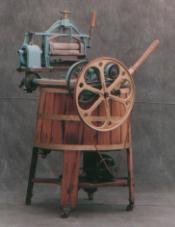
The virtual tour offers glimpses of the forgotten world of early hand, gas and electric powered washers. You can see the washers with wringers that advertise themselves with phrases like “Never Crush” and “Saves Women’s Lives”. Fingers were known to be not only crushed, but severed in wringers. There is also the Horton which claims “A Horton Washer will add many years to your life. It will save your health– keep the wrinkles out of your face–keep you youthful”.horton antique washer

The site includes an article about the invention of the washing machine, options to have your own antique appraised and of course, the virtual tour.

The tour is self guided and includes outdoor views of the rural museum, two buildings filled with vintage washers, a workshop and a barn with what appears to be washers awaiting restoration.

A fun afternoon’s visit, with some history and a great feeling for how much easier laundry is now.

Filed Under: Features, Humor, Laundry, News, Washing Machine Tagged With: antique washing machine, Washing Machine Museum

Installing and Using Your Clothes Dryer Safely

March 14, 2008 By NightOwl

Whether you are installing a new dryer, relocating an old one, or just looking to remind yourself of some basic household safety guidelines, you can clickon our link to The Association of Home Appliance Manufacturers(AHAM) handbook on dryer care and safety.

You can read about:

  • Proper installation materials and how to use them
  • How to clean and maintain your dryer to get it working longer and at its best
  • Items that should not be dried in a dryer

This is a short and easy to read brochure that will get you updated quickly.

Filed Under: Features, Laundry, Safety, _ Tips Tagged With: AHAM, Association of Home Appliance Manufacturers, dryer installation, dryer safety

  • « Go to Previous Page
  • Go to page 1
  • Interim pages omitted …
  • Go to page 12
  • Go to page 13
  • Go to page 14
  • Go to page 15
  • Go to page 16
  • Go to page 17
  • Go to Next Page »

Primary Sidebar

[footer_backtotop]

© 2006-2019 Appliance.net · Log in