• Skip to primary navigation
  • Skip to main content
  • Skip to primary sidebar

Appliance. net

Appliance news, reviews, ratings, forums, reports and buyers guides.
Locate repairs and parts. for home and kitchen appliances.

  • About Appliance.Net
    • BestPrice Family
    • Contact
    • Become a Featured Dealer
    • Retailer & Repair Services Advertising
  • Shopping
  • Appliance Forum
  • Manufacturers
    • Manufacturers 800 Numbers
    • Aga
    • Bosch
    • Caldera
    • Dacor – The Life of the Kitchen
    • General Electric – GE
    • Jenn Air
    • Sears – Kenmore
    • Thermadore
  • Sections
    • Features
    • News
    • Recalls
    • Kitchen
      • Dishwasher
      • Ranges Ovens and Cooktops
      • Refrigerators and Freezers
      • Microwave Oven
    • Household
      • Consumer Electronics
      • Heating and Cooling
      • Vacuum Cleaners
    • Laundry
      • Washing Machine
      • Dryers
    • Safety

USB Batteries

September 21, 2006 By Appliance

Gizmodo blogs about USB batteries, an idea whose time has come, but isn’t quite ready for prime-time.

Moixa USBCELL batteries can be charged using a regular charging station as well as the USB port in your PC, laptop, Xbox 360, or USB car charger.

Power and longetivity still need work, but I still remember brick-sized cellphones and have faith that we’ll get there.
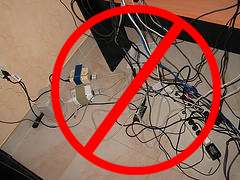
transformer tangle
I’m dreaming of a day when the tangle of transformers and cords and poorly-configured power strips are replaced by a USB bank and all power jacks for cellphones, PDAs and other electronics are replaced with USB inputs.

When USB outlets are ubiquitous in airplanes, cars, hotels, schools and businesses, we’ll pretty much always be juiced or within easy juicing distance.

In the meantime, we’ll have to make do…

Targus PAPWR200U Universal Car/Airplane Notebook Power Adapter Sony Power Charger with 4 Ni-MH AA Batteries

Hat tip: IFOC

Filed Under: News

Kitchen Improvements Pay

September 15, 2006 By Appliance

From a UK website called NewsShopper. I’ve substituted American English for British English:

It’s often said the kitchen is the room most likely to persuade you to buy a property – or put you off. If you’re thinking of selling, it pays to ensure your kitchen is up to scratch.

Kitchens matter, and even if you’re not selling, an attractive and functional kitchen adds value to your home and makes it easier to live in.

Gutting the room and starting from scratch is a great but only if you have the cash, time and patience, because it is disruptive and expensive.

If you want a quick fix, however, there things you can do without it costing the earth.

The layout of your kitchen is key because it’s such a functional room. If the layout isn’t right, your options for changing it without gutting it are limited, but there are some.

The most ergonomic layout is to have the refrigerator, sink, and the oven and stove in a triangle in relation to each other. It should be a triangle because these are the three things you keep returning to in a kitchen, especially when preparing a meal.

If you don’t have this triangle configuration, can you move something so that you do? Maybe you can swap appliances over, or put an under-counter fridge where you once had a unit.

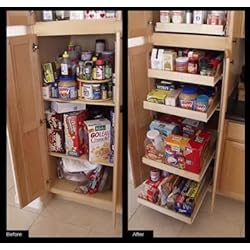
Do-it-Yourself Rolling Shelf Kit - (Natural)
If lack of worktop space is a problem, think of how you can make what you’ve got go further. For example, microwave brackets get this appliance off the worktop, creating a surprising amount of room.

If your home is on the market, something as simple as removing the dishrack before viewings makes the draining board seem part of the worktop and thus creates the illusion of more space.

Remember people viewing your home will open your cupboards and drawers, so it’s important to keep these tidy and uncluttered.

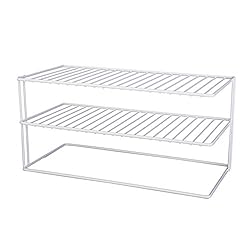
Cabinet Organizer - 2 Shelf - (White)

Another solution to lack of workspace is to install an island unit – if you’ve got the room.

If you haven’t, maybe a slimline table or breakfast bar will give you more workspace and still allow you to move round the room with ease.

Any kitchen you can bill as a kitchen/diner when selling your home is a bonus because these are much in demand, so even if you can only squeeze in a small breakfast bar or table, do so. Hinged tables which fold flat against the wall when not in use are a good idea if space is tight, and installing one is a relatively simple DIY job.

30/411C Cookware Lid Rack 22x6
If clutter from your cupboards tends to spill out onto the worktop, you have to force yourself to be tidy and stay tidy until your home’s sold. Try putting utensils in drawers or jars/pots and store pastas, cereals and the like in ceramic, glass or chrome airtight jars, preferably stackable ones.

If you’ve got nice glasses, crockery pots and pans, get out your drill and put up some shelves – floating shelves are very fashionable – which gets them out of the cupboards, freeing up space.

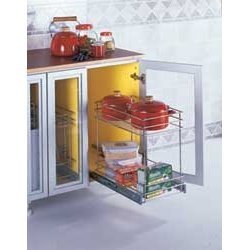
Under Sink Pull-Out Organizer
Baskets or boxes can also be stacked on top of wall units if your kitchen has high ceilings and you need to make the most of the space – looking in need of storage is a big no-no when selling your home – though don’t store anything needed too often, or too heavy, up there.

When you’re replacing a kitchen, it’s easy to incorporate manufacturer’s clever design ideas for awkward and small spaces, but if you’re making the best of what you’ve already got, it pays to think laterally, especially when selling your home.

Filed Under: Kitchen, _ Tips

Portable Generators – Consumer Product Safety Commission Warning

September 14, 2006 By NightOwl

FOR IMMEDIATE RELEASE
August 21, 2006
Release #06-239
CPSC Media Contact: Scott Wolfson
(301) 504-7051
* Statements from the Commission attached

CPSC Approves NPR Proposing New Warning Label for Portable Generators

WASHINGTON, D.C. – In an effort to reduce the rising death toll from carbon monoxide poisoning associated with consumer use of portable generators, the U.S. Consumer Product Safety Commission (CPSC) voted unanimously (2-0) to issue a notice of proposed rulemaking (NPR).

The proposed standard would require manufacturers to place a new warning label on portable generators.

The label includes pictograms and statements warning consumers that a generator’s exhaust contains poisonous carbon monoxide and that a generator should NEVER be used inside the home or in partially enclosed areas such as garages.

Crisis Preparedness Handbook: A Complete Guide to Home Storage and Physical SurvivalCPSC has reports of 64 people who died last year from carbon monoxide poisoning associated with portable generators. Many of the deaths occurred after hurricanes and major storms.

Later this year, CPSC staff will be providing the Commission with information on other potential regulatory and non-regulatory options to reduce deaths and injuries caused by carbon monoxide poisoning from generators.

The public has 75 days to comment to the Commission about the NPR. Comments can be submitted to CPSC’s Office of the Secretary at tstevenson@cpsc.gov

STATEMENT OF THE HONORABLE NANCY A. NORD ACTING CHAIRMAN, U.S. CONSUMER PRODUCT SAFETY COMMISSION NOTICE OF PROPOSED RULEMAKING FOR PORTABLE GENERATORS

August 15, 2006

Today I am voting to publish for comment a Notice of Proposed Rulemaking (NPR) that would require all portable generators sold to consumers in the United States bear a specific warning label. The purpose of the proposed rule is to better warn consumers about the very real danger of carbon monoxide (CO) poisoning posed by the use of a portable generator in or near a home.

Grundig FR200 Emergency Radio (Red)The demand by consumers for portable generators has increased in recent years. Portable generators can be extremely useful machines, particularly after the loss of electricity in the wake of a storm or for some other reason. However, as the number of portable generators in use has increased, so too have the number of people who have been killed or sickened by CO poisoning from those generators. The amount of CO emitted >from a portable generator can be up to several hundred times that released by a modern car’s exhaust and can kill consumers in a very short period of time, especially while they sleep, as several recent, tragic incidents have demonstrated.

In addition to the proposed warning label requirement, I anticipate that the Commission will soon receive a staff package outlining other regulatory options the Commission might consider regarding portable generators. I look forward to receiving that package as well as the public’s comments on this NPR, and to continuing to work with all of our stakeholders on this important issue.

STATEMENT OF THE HONORABLE THOMAS H. MOORE COMMISSIONER, U.S. CONSUMER PRODUCT SAFETY COMMISSION ON THE NOTICE OF PROPOSED RULEMAKING REGARDING LABELING REQUIREMENTS FOR PORTABLE GENERATORS

August 15, 2006

In the six year period from 2000 through 2005, CPSC staff is aware of at least 222 deaths related to carbon monoxide (CO) poisoning associated with portable generators. Far too many of the deaths associated with the use of portable generators predictably occur following severe weather events that typically cause power outages. Consumers, unknowingly, expose themselves and others to lethal CO gas while using the portable generator as a substitute power source often during times of high stress and anxiety.
…
1500W Portable GeneratorAs mentioned above, our staff is conducting a thorough review of the existing portable generator safety measures. While improvements to warnings are important, warning labels, by themselves, may be insufficient as a sole means of addressing the CO poisoning hazard. From our experience, we know that simple awareness of a possible hazard will not in every instance dissuade a consumer from behavior that leads to exposure to the hazard. Therefore, in the very near future, our staff will be providing to the Commission a briefing package that will contain a comprehensive discussion on additional regulatory and non-regulatory alternatives which could be used to further reduce CO related deaths and injuries associated with the use of portable generators.

To see the full release on CPSC’s Web site, including a picture of the proposed warning label, please go to: http://www.cpsc.gov/cpscpub/prerel/prhtml06/06239.html

Filed Under: News

Home Appliance News Survey – 7 September 2006

September 7, 2006 By Appliance

It’s a short week and I’m still not convinced the summer is “officially over”, so blogging is going to be light today with some links to useful resources:

  • A site called Kensington Bungalow is writing a diary about renovating their house. Today’s entry is called DIY Appliance Repair.
  • eCoupons is providing appliance coupons good through September 9 for items from Best Buy.
  • A site I’ve just discovered, Apartment Therapy: Los Angeles, has a nice piece about Sears Appliance Outlets. While the article is focused on Southern California, you can find a Sears Appliance Outlet by entering your zip code, unchecking All Sears Stores and checking Sears Appliance Outlet Stores: Discontinued or slightly blemished appliances at reduced prices near the bottom of the page.
  • Savvy Saver has a piece this week entitled You too can be an appliance repair person!. Even better is their dishwasher – specific article Repair or replace?

That’s it for now.

Filed Under: Dishwasher, Parts/Repairs, _ Tips

New Maytag Refrigerator Nightmares – They Just Don’t Make Maytag Men Like They Used To

September 5, 2006 By NightOwl

Remember avocado green appliances? I believe they were popular in the 1960’s and 1970’s . Last fall, my mother decided that this was the year that her almost forty- year- old refrigerator had to go. The green didn’t bother her, and it was working just fine, but she thought that at about forty years, she was pushing her luck that it would continue to work well. She felt should replace it now while she had the ability to shop around and make the best choice without being rushed because she was without a fridge.

So after learning that Amana, which was the brand she had and liked very much is now owned by Maytag and that the Amana models did not come in the larger size she preferred, my mother bought the Maytag model #MTB2195AEW on February 3, 2006. It is traditional in style with the freezer on top and has no accessories such as an icemaker or water dispenser. The refrigerator was delivered with a large dent in the front door and had to be returned for another one. The second one seemed fine and was installed. It has not been seven months yet and she has had five service calls and one more is scheduled for next week. Six service calls in six months!

The first call was for help with the installation of the shelves in the freezer. The instruction manual did not make it clear (and it does seem counterintuitive) that small pieces of plastic must be broken in order to make the shelves fit in the freezer. The serviceman helped with the shelves and ordered a new set of clips to hold the kickplate that was loose because of a broken clip. (It seems it was broken at the time of delivery.) We should have seen what was coming…

Call number two was regarding the freezer icing up. There were icicles in the freezer because the door was out of alignment. The hinges were replaced. Soon after this the bottom shelf in the refrigerator and the crisper began freezing. This brought about service call number three. These visits had all been with the local company that works with the store where the purchase was made. The repairman said he was unable to fix it although he thought the problem might be the thermostat. He referred her to Maytag and left an 800 number for her to call.

My mother called Maytag right away and was told that the soonest appointment would be two and a half weeks later. She waited and was rewarded at this, her fourth service call, by having the damper replaced. Within two days everything was freezing again on the bottom shelf and in the crispers. ( For those who don’t know, crispers are the bottom drawers in the fridge used for storing fruits and vegetables.) She called the Maytag folks again who told her she would need to wait another two and half weeks for service. When the repairman arrived for this fifth call, he looked at the fridge, told her that she should not place canned foods on the bottom shelf and that the crisper is supposed to freeze things. She suggested that she should just return it, to which he replied “You do that.” and he left.

avocado paintOne more call has been placed – to the store where she purchased this malfunctioning Maytag. They want another shot at fixing it. She is waiting yet another week for the service call and we all hope that they don’t send the repairman who referred her to Maytag customer service three calls ago because it seems that Maytag has no intention of offering service to this new ( and possibly former) customer.

This all makes me wonder why the old green fridge, which had almost no problems in it’s nearly forty years, lasted so long. Was the old Amana a better made appliance? Is Maytag, which has been known in the past for it’s high quality, losing its edge? Or does avocado green have a special effect on appliances?

It’s tempting to spend a few dollars at Amazon.com for some paint…

Filed Under: News

Garbage Disposals — Keep in Shape with Proper Care, Love and Feeding

August 26, 2006 By Appliance

In-Sink-Erator 444 Disposer 444 Garbage Disposer - Kitchen Sink DisposalAs the summer comes to an end and used exercise equipment appears more frequently on EBAY and Craigslist, there are other things that require calesthenics to keep in proper shape. Kitchen appliances. This will be the first in a series of easy maintenance tips designed to extend the life of your essential appliances.

Rosie Romero of the Arizona Republic writes:

The two most common types of garbage disposers are continuous feed and batch feed.

Continuous feed is the most popular. To operate, you just push the food down, then turn on the disposer while running water.

The batch feed is not as popular, but it’s great for homes with small children. The stopper must be on and locked in place before the disposer will turn on. This eliminates curious fingers from being hurt if the disposer is turned on accidentally.

The majority of disposers have 1/3 to 1 horsepower and last about 10 years.

A chamber of stainless steel (which is stronger than other materials and corrosion-resistant) with a 3/4-hp motor works well for most homeowners. (see pictured In-Sink-Erator)
…
Expect to pay $70 to $250 for a new unit. The more expensive models have higher horsepower, meaning they can chop through more materials, even small bones, and some can reduce noise. Also consider a disposer with an auto-reverse mode, which allows the blades to go in the opposite direction to clear jams.

This is a lot safer than using a fork or your hand, which I never would recommend.

The key tips:

  • Run the garbage disposal unit for 30 seconds when using, giving it plenty of time to chop up the food.
  • Always run water while using the disposer. This helps maintain the integrity of the blades while washing food particles out of the unit. Cold water should be used. This will coagulate any grease inside and make it easier for the disposer to chop.
  • You should continue to run water for a while after the unit is turned off to clear debris.
  • Occasionally add vinegar or citrus peels to maintain your disposer and keep gunk from building up. Citric acid is a natural cleaning agent and works well as a deodorizer.
  • Some chemicals, such as drain cleaners and bleach, can do more harm than good
  • It’s best to throw larger amounts of food into the garbage than down the drain.

Filed Under: News

Kitchen Appliance News – August 2006

August 15, 2006 By Appliance

Frigidaire FEF336EC 30\When there were three major TV networks, appliances were fewer and simpler. WJAC-TV has an article Kitchen Appliance Features You Need and Don’t Need which helps you to decide which features should you pay for, and which ones should you forget?

For ranges:

For electric ranges, smooth glass surfaces are better because the coils on older style ranges are so difficult to clean.

For gas ranges, it’s worth paying a bit more to get a sealed burner and avoid those with a gap around the burner where spills of liquids and crumbs could easily drip below the surface

Upgrading to a self cleaning oven for an extra fifty dollars is definitely worth the money to avoid the task of cleaning it up yourself.

On the other hand, not all bells and whistles are necessary. A warming drawer might add as much as $150 to the price of the range and it’s a job done easily as well in your microwave oven.

For refrigerators:

“The least expensive refrigerators have old fashioned wire shelves. That means that spills can drip down. We think it is worth paying a little bit more and getting glass shelves that have rims all the way around the edge to contain the spills. It’ll make your life much easier in the long run.”

Good Housekeeping says: don’t even consider a refrigerator without an “automatic defrost” feature. For more tips on finding the right appliance for your family, check out the August issue of Good Housekeeping or visit www.goodhousekeeping.com.

Featured above: Frigidaire FEF336EC 30″ Freestanding Electric Range with 4 Radiant Elements & Self-Cleaning Oven

Filed Under: Kitchen, Ranges Ovens and Cooktops, Refrigerators and Freezers

Braun Immersion Blender

July 25, 2006 By NightOwl

Braun MR5550MBC-HC Multiquick Professional Hand Blender, MR5550 M BC-HC White Multipurpose

One of the handiest tools in my kitchen is my immersion blender, also known as a hand blender. Immersion blenders have been around for about ten years, and do almost everything that a regular blender does. I have one of the older models made by Braun. Braun makes a number of small household appliances. I also have their coffee maker. (But that’s something for another day.)

For those of you not familiar with an immersion blender, imagine a 12 inch plastic cylinder ergonomically designed to fit comfortably in your hand with a twirling blade at the bottom. To mix, blend or puree, all you have to do is literally immerse the blade in your pot, cup or bowl and push the button. The blade must remain fully immersed or you’ll splatter yourself a bit.

One of the things I like is its ease of cleanup. If you’d like a smoothie, all you have to do is put the ingredients in a large cup, give it a whirl or two, run the blade end under hot water for a few moments and it’s clean. Nothing else to wash but your cup, but of course you’d have that anyway. My Braun hand blender came with a plastic cup as an accessory along with a wall mounting bracket so that it can be conveniently stored in a cupboard. The new models come with a variety of accessories and range in price from around $15.00 to over $400.00 by companies such as Waring, KitchenAid, and Conair.

Something that is important to me, as a matter of both safety and convenience, is the ability to blend right in the pot. If you are making hot soup that needs to be pureed, you have three options.
Wait until it cools and then pour it in small batches into your traditional blender, pour the soup in hot and take the chance of scalding yourself, or, with an immersion blender you can just put the blade into the pot and off you go.

A quick tip: When you are pureeing, be sure to keep the base of the blender at an angle to the base of the pot. If the blender is touching the bottom of the pot, the food won’t circulate, and the machine can’t do its job. I had a friend who had problems using her immersion blender and therefore disliked it. When I explained that you need to keep it angled to allow the food to move through the mechanism she called back to say that it worked perfectly. Depending on the depth of what you are blending you should keep the blade about an inch above the bottom of the pot, and you should move the unit through the liquid as if you were gently stirring it.

The appliance is versatile. Not only do I use it for the basics like milk shakes, smoothies and pureeing soup, it is also wonderful for making homemade refried beans and Hummus. Here’s a recipe you can use to try it out:

Sweet Potato Soup

  • 2 teaspoons butter or margarine
  • ½ cup sliced carrots
  • ½ cup sliced celery
  • 1 ½ cups seeded, peeled and chopped tomatoes
    (or do what I do and use the 28oz can of diced tomatoes)
  • 6 cups broth (chicken, beef, or vegetable – water will do if necessary)
  • 1 ½ pounds sweet potatoes, peeled and sliced thinly
  • pepper to taste
  • Plain yogurt as sour cream as garnish

Jane Brody\'s Good Food Book/Jane Brody\'s Good Food Gourmet/Boxed Set
In a large pot, sauté the carrots and celery in the butter or margarine for about 5 minutes. Do not brown them. Add the tomatoes and cook to reduce the liquid a bit. Add the broth and the sweet potatoes, bring the mixture to a boil, reduce the heat, cover the pot and let it simmer for 20 to 30 minutes or until the vegetables are very soft.

Remove the pan from the heat and puree the mixture directly in the pot. Add pepper and reheat as needed. (This soup can be served cold also, but we prefer it hot) Serve with a dollop of yogurt or sour cream.)

This recipe is from Jane Brody’s Good Food Gourmet.

Filed Under: Cooking, Kitchen, Recipes, Small Appliances, _ Tips

If You Can’t Stand the Kitchen Heat, Try Appliances Alfresco

July 11, 2006 By Appliance

It’s July and maybe you haven’t yet emptied the Independence Day charcoal ash from the bottom of your Weber kettle grill. You’d like to figure out a way to heat up your house by boiling corn on the cob or macaroni or potatos to make salads to go along with the remaining summer barbeques you’re planning.

According to the Charlotte Observer:

The outdoor kitchen trend caught on with average consumers in the past two or three years, according to local builders, designers and landscapers.

Architects nationwide have reported a surge in the last year of customers requesting outdoor living space such as decks, patios and outdoor kitchens, according to a 2006 American Institute of Architects survey.

“The outdoor room is sort of the family room of the 21st century,”

More here.

more here

Filed Under: Gas Range, Kitchen, Refrigerators and Freezers

No Fan Of Air Conditioner Repairs — Do It Yourself Maintenance Tips

June 28, 2006 By Appliance

air conditioning repairWith summer heat and threats of air conditioner supply shortages, if you can’t buy a unit, then keeping yours working is the way to go.

An air conditioner’s filters, coils, and fins require regular maintenance for the unit to function effectively and efficiently throughout its years of service. Neglecting necessary maintenance ensures a steady decline in air conditioning performance while energy use steadily increases.

Air Conditioner Filters: The most important maintenance task that will ensure the efficiency of your air conditioner is to routinely replace or clean its filters. Clogged, dirty filters block normal air flow and reduce a system’s efficiency significantly. With normal air flow obstructed, air that bypasses the filter may carry dirt directly into the evaporator coil and impair the coil’s heat-absorbing capacity. Keeping the filter clean can lower your air conditioner’s energy consumption by 5%–15%.

air conditioner newFor central air conditioners, filters are generally located somewhere along the return duct’s length. Common filter locations are in walls, ceilings, furnaces, or in the air conditioner itself. Room air conditioners have a filter mounted in the grill that faces into the room.

Some types of filters are reusable; others must be replaced. They are available in a variety of types and efficiencies. Clean or replace your air conditioning system’s filter or filters every month or two during the cooling season. Filters may need more frequent attention if the air conditioner is in constant use, is subjected to dusty conditions, or you have fur-bearing pets in the house.

Air Conditioner Coils: The air conditioner’s evaporator coil and condenser coil collect dirt over their months and years of service. A clean filter prevents the evaporator coil from soiling quickly. In time, however, the evaporator coil will still collect dirt. This dirt reduces air flow and insulates the coil, reducing its ability to absorb heat. To avoid this problem, check your evaporator coil every year and clean it as necessary.

Outdoor condenser coils can also become very dirty if the outdoor environment is dusty or if there is foliage nearby. You can easily see the condenser coil and notice if dirt is collecting on its fins.

You should minimize dirt and debris near the condenser unit. Your dryer vents, falling leaves, and lawn mower are all potential sources of dirt and debris. Cleaning the area around the coil, removing any debris, and trimming foliage back at least 2 feet (0.6 meters) allow for adequate air flow around the condenser.

Coil Fins: The aluminum fins on evaporator and condenser coils are easily bent and can block air flow through the coil. Air conditioning wholesalers sell a tool called a “fin comb” that will comb these fins back into nearly original condition.

Condensate Drains: Occasionally pass a stiff wire through the unit’s drain channels. Clogged drain channels prevent a unit from reducing humidity, and the resulting excess moisture may discolor walls or carpet.

Window Seals for Room Air Conditioners: At the start of each cooling season, inspect the seal between the air conditioner and the window frame to ensure it makes contact with the unit’s metal case. Moisture can damage this seal, allowing cool air to escape from your house.

Preparing for Winter: In the winter, either cover your room air conditioner or remove and store it. Covering the outdoor unit of a central air conditioner will protect the unit from winter weather and debris.

Filed Under: Heating and Cooling, News

  • « Go to Previous Page
  • Go to page 1
  • Interim pages omitted …
  • Go to page 80
  • Go to page 81
  • Go to page 82
  • Go to page 83
  • Go to Next Page »

Primary Sidebar

[footer_backtotop]

© 2006-2019 Appliance.net · Log in